
When it comes to sports, there are always two games: the one on the field and the one on social media where fans consume stats, re-caps and battle it out with other diehards online (Pedersen et al, 2016). The Football Associations (FA) management of the England Football Team has leveraged the power of visual media to deliver the action from the field to the small screen in order to: inspire fans of the national team, fill seats at games, and even help ramp up the crowd’s energy within the stadium itself, thereby heightening the motivation of the team on the pitch (Copperman, 2016). This has the comprehensive effect of greater fan engagement on the overall property of the England Football Team. As any football team will tell you, a devoted, engaged fanbase is integral to the success of the organisation as a whole (Chadwick and Beech, 2007). Today’s world of instant communication provides football clubs with significant opportunities to engage with their fan base (Allison, 2013). The use of different social media platforms is basically the holding midfielder of online fandom! But in the crowded, noisy space of the social media playing field, how does the England Football team’s social media content stand out?
The FA has built a content strategy that delivers live, near-live and archived video from the England team across its social media channels, building audience and engagement around England internationals and friendly games. Through working in partnership with an external media organisation, the FA has the ability to maximise the amount of video distributed outside its current broadcast rights agreements (Grabyo, 2017). The emergence of digital technology and the expansion of new media markets have driven the sports media complex into a new dimension to the benefit of all concerned, particularly fan engagement (Lefever, 2012).

In order to reach out to and engage with fans who are part of a demographic that only use traditional media sources, the FA announced a deal in January that would ensure England games would stay on free to air (terrestrial) TV through ITV (Grabyo, 2017). Although, millions of fans and consumers have now transitioned away from purely using traditional media to receive their sport content in an integrated approach, where they engage through a variety of platforms (Shaw et al, 2015). By distributing video to social platforms alongside the traditional broadcast output, the FA has been able to take England fans behind the scenes of the national team and create a relationship with the viewers that extends beyond the 90 minutes.
Content distributed by the England Football Team’s official YouTube channel, includes clips from the training ground, changing rooms and exclusive footage from game days creating a complementary experience, alongside its traditional linear broadcast coverage. Church-Sanders (2012) highlights that advancements in digital media have transformed the sporting landscape by providing fans with on-demand access to high quality and insightful content anytime and anywhere, whilst in return giving sports properties like the England Football Team a pathway to reach a wider audience and further engage with its fans. Such examples include the occasion where England fans were able to observe Michael Keane receive his first England cap from former National Team head coach Glenn Hoddle – an occasion which took place from within the changing room (Weaver, 2018). This type of access has been previously unavailable to England fans, yet by publishing this footage to social platforms, the FA can take fans further into the England inner sanctum. The FA also provide a new ‘second-screen experience’ for those England fans who reside great distances from Wembley Stadium itself, providing exclusive footage via iPad and mobile phone to be accessed alongside the live TV broadcast (Winter, 2014). To highlight the point further, the FA has been able to enhance the opportunity for diverse and inclusive fan engagement with the England team, regardless of any demographic factors as a result of the changing sports media landscape and the change in how fans can now consume sport.

Why make die-hard football fans endure the pain of a boring international break any longer? Instead let the official England Football Team YouTube channel treat fans to behind-the-scenes access of training, player interviews and match days through ‘tunnel cam’, ‘room-mates’, ‘inside access’ and much more.
Last summers football World Cup, allowed the FA to provide fans with the ultimate access and engagement throughout the tournament via their variety of media platforms. The England Football Team created a daily YouTube show called the “Lions’ Den” centred around its men’s team at the World Cup (Joseph, 2018). The 30-minute show was hosted by TV presenter Craig Mitch, who interviews players, management staff and fans (Joseph, ibid). Fans were encouraged to send questions to Mitch during the broadcast and vote in live polls, which helped create the added interactivity and engagement for fans. Social media platforms can provide fans with an additional means to engage with their team and are a valuable forum for sport organisations to better understand fan motivations and strengthen fan relationships (Stavros et al, 2014). Members of the FA’s supporters club were able to speak to players via FaceTime live on the show, which was powered using an online video platform.
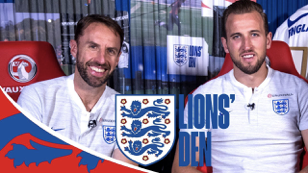
From the start of the tournament, the “Lions’ Den” live show was produced daily, which gained a cult following. The first twelve episodes of the show accumulated around 600,000 views (Weaver, 2018). While access to players will always give a show like this a boost over other types of media content, the fact that the participating stars are so comfortable chatting to presenter Craig Mitch made the platform so compelling. The best social media accounts in football are the ones whose managers and players have realised that they’re speaking directly to fans on a fan-centred platform.
A lot changed in the England camp in the recent 2018 World Cup, with the media being allowed greater access than ever before, allowing them to really get to know the players personally. There were fun and games being played out among the players, which the fans have never had access to previously because of this portrayed negative image in the past.

References
- Allison, N., (2013). Going beyond on-pitch success: Fan engagement as a catalyst for growth.
- Chadwick, S. and Beech, J., (2007). Introduction: the marketing of sport. The Marketing of Sport, Pearson Education, Harlow, pp.3-22.
- Church-Sanders, R. (2012). Digital Strategies for Sport. London: SportBusiness Group.
- Copperman, A. (2016) Winning Sports Social Media Marketing: 21 Ways to Engage Fans Online. [Online] Available at: https://blog.adobespark.com/2016/09/19/winning-sports-social-media-marketing-21-ways-to-engage-fans-online/ [Accessed 26th March 2019].
- Grabyo, (2017). The FA uses social video to unite England Fans. [Online] Available at: https://about.grabyo.com/the-fa-uses-social-video-to-unite-fans/ [Accessed 28th March 2019].
- Joseph, S. (2018) England football bosses are testing a daily YouTube show at the World Cup. [Online] Available at: https://digiday.com/marketing/england-football-bosses-testing-youtube-daily-show-world-cup/ [Accessed 26th March 2019].
- Lefever, K., (2012). Sports/Media Complex in the New Media Landscape. In New Media and Sport (pp. 7-30). TMC Asser Press, The Hague, The Netherlands.
- Pedersen, P.M., Laucella, P.C., Kian, E. and Geurin, A.N., (2018). Strategic sport communication. Human Kinetics.
- Shaw, J.M., Mitchell, C.A., Welch, A.J. and Williamson, M.J., (2015). Social media used as a health intervention in adolescent health: A systematic review of the literature. Digital Health, 1, p.2055207615588395.
- Stavros, C., Meng, M.D., Westberg, K. and Farrelly, F., (2014). Understanding fan motivation for interacting on social media. Sport management review, 17(4), pp.455-469.
- Weaver, F. (2018) How has football changed the game on social media? [Online] Available at: https://www.sookio.com/blog/how-social-media-has-changed-the-way-football-teams-and-their-fans-connect-with-each-other-online [Accessed 28th March 2019].
- Winter, H. (2014) World Cup 2014: FA plans to transform Wembley. [Online] Available at: https://www.telegraph.co.uk/sport/football/teams/england/10904508/World-Cup-2014-FA-plans-to-transform-Wembley.html [Accessed 26th March 2019].

 The sports media nerd