
It started out as somewhat of a desperation move by the England and Wales Cricket Board (ECB) to broaden the appeal of a staid and tired sporting institution of the English summer, but 15 years on, Twenty20 has taken over the game of cricket in many respects. The ECB was looking for a shortened form of the game to attract a younger audience to stem a serious decline in crowd numbers for country cricket (McGarry, 2016). The solution was a 20-overs a side game with significant alterations in the rules, including fielding restrictions, batting and bowling power-plays, and the “free-hit” following a no-ball. Sport has had to relinquish some of its traditions, rules and formats to become appealing to the media and fans alike (Riot et al 2018). Fan engagement and media leverage are inextricably linked.

Call it the ‘footballisation’ of cricket or a repackaging that worked: Twenty20 has emerged as an instance of product marketing and modifying of a game format gone right. It repackaged international cricket, in creating a new version of the sport which was an instant hit among its target consumers, viewers and advertisers alike. The success of a mass entertainment product is measured in terms of the eyeballs and advertising revenues it gains (Basu and Mehra, 2007). The all-new Twenty20 format exceeded expectations on both fronts. Coakley (2017) believe there are six reasons why the media influences sport and forces rule changes: maximise dramatic moments, ensure competitive balance, heighten player and team attachment, increase scoring, speed up action, and provide commercial breaks.
The modern game of Twenty20 cricket has resulted in an evolution of how the sport is now consumed through the media and by its fan base. From the more traditional approach of the radio (more suited to the older demographic in favour of the Test Match format), it migrated to television and is now increasingly moving to digital platforms. As technology has improved, today’s cricket commentators take recourse to increasingly specialised tools to make sense of the game for their audience (Choudhury, 2017). And with the advent of Twenty20 cricket, there is an increasing emphasis of the dramatic moments. For example, many of David Lloyd’s infamous impassioned shrieks of excitement during a domestic Twenty20 blast game would have been strictly frowned upon in previous decades when Richie Benaud reigned supreme in the commentary box (McGarry, 2016). Fans have changed their approach as to how they consume sport, with the media having created this change, but it’s clearly being fuelled by the demands of the fans and how they engage.

The media and sport have undoubtedly adapted to one another in order to maximise their entertainment potential (Goldlust, 2018). They zoom in on conflict, suspense, charisma, strategy, rules, measurable results (such as victory, draw, loss, or a record), and the increasingly complex nature of sequential competitions. In terms of the tools used, media sports are a type of informative journalism (Horky and Stelzner 2013). However, media sports occasionally follow their own rules which differ from those of traditional informative journalism.
There are three layers of development within the formation of Twenty20 cricket: the development of sport as a driver of globalisation, the influence of cricket as mass entertainment and, finally, the adaptation of entertainment industries more generally (Smith, 2017). With 20 overs a side, a game takes about three hours. A three-hour game can be synchronised with prime-time telecasts on television, or people can catch the game live after a day at work. Even as the broadcasters struggled to cram in fifty or so advertisement breaks into three hours, advertisers scrambled to book the slots; and when the format’s popularity became evident, they were more than ready to pay a premium (Basu and Mehra, 2007). The first Twenty20 World Cup back in 2007 also gave non-traditional brands an opportunity to enter the cricket advertising market at much lower costs, as the meltdown had levelled sponsorship rates. The lure of attention and further in-kind rewards (increased profile; status; finance; greater numbers of spectators and participants; and resultantly a heightened appeal from sponsors) is deemed of greater benefit to the sport than of its costs (Goldlust, 2018).
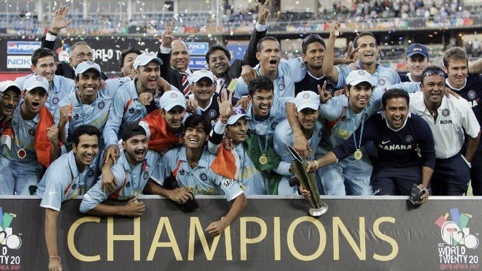
Nowadays the most popular and watched domestic Twenty20 tournament is by far the Indian Premier League (IPL). The IPL broadcasting deal in 2017 was worth £6.57m for each match, making it one of the world’s most lucrative sports leagues in terms of television rights (Smith, 2017). Tech companies, inevitably, are competing for a slice of the new cricketing bounty. Facebook bid around £600m for the IPL rights but fell short; Amazon and Yahoo! also signed up without participating in the final bidding process. The IPL’s popularity is also driving adjacent business plans in the entertainment industry. Netflix in India recently unveiled plans for a new drama series based on cricket and corruption. Amazon is already streaming ‘Inside Edge’, a glitzy ten-part series drawing on similar themes inside a fictional Mumbai Twenty20 team (Smith, 2017). This has all come about as a result of added spectator interest and engagement in what could be considered as a completely new sport! Both Netflix and Amazon, revealingly, are using cricket as their pitch to reach a wider audience.
Adversely, partnering with the media has engendered sport resulting in a loss of control, to some extent, over crickets own activities and destiny. The media is putting itself in a powerful position to dictate the characteristics of events, or indeed, even to change fundamental aspects of a sport e.g. it’s rules (Stead, 2010).
The advent of Twenty20 has brought a new audience to the game, notably in India but likewise increasingly globally. Power inevitably rebalances, as the shape of the sport’s popularity changes. The shorter format has created a different distribution, both on and off the field. A game that was once synonymous with antique Englishness and gentlemanly fair play has become central to the Asian expansion model for American business giants. Cricket, both real and dramatised, is now seen as a way to reach new markets and engage new audiences that were previously not there.
References
- Basu, A and Mehra, P. (2007) Game Makeover | T20: a formula for success. [Online] Available at: https://www.livemint.com/Consumer/QJG2VuMWkf2f5NAwdyjFZI/Game-Makeover–T20-a-formula-for-success.html [Accessed 9th April 2019].
- Choudhury, A. (2017) How social media has changed the way cricket fans consume the game. [Online] Available at: https://scroll.in/field/806209/how-social-media-has-changed-the-way-cricket-fans-consume-the-game [Accessed 11th April 2019].
- Coakley, J. (2017) Sports in Society: Issues and Controversies. 12th ed. New York: McGraw Hill Education.
- Goldlust, J., (2018). Playing for keeps: Sport, the media and society. Hybrid Publishers.
- Horky, T. and Stelzner, B., (2013). Sports reporting and journalistic principles. Routledge handbook of sport communication, pp.118-127.
- McGarry, A. (2016) Innovations that changed the game of cricket. [Online] Available at: https://www.abc.net.au/news/2015-11-26/innovations-that-changed-cricket/6977816 [Accessed 9th April 2019].
- Riot, C., Kennelly, M., Hill, B. and Trenberth, L., (2018). The sport business industry in the twenty-first century. In Managing Sport Business (pp. 35-53). Routledge.
- Smith, E. (2017) How cricket is going global with Netflix and Amazon. [Online] Available at: https://www.newstatesman.com/politics/sport/2017/09/how-cricket-going-global-netflix-and-amazon [Accessed 9th April 2019].
- Stead, D. (2010) Sport and the Media. In: Houlihan, B. (ed.) Sport and Society: An Student Introduction. London: SAGE Publications Ltd. Pp. 328-347.

 The sports media nerd